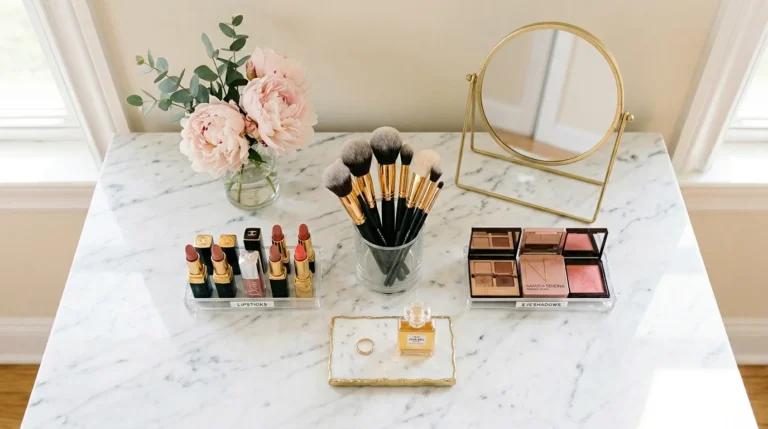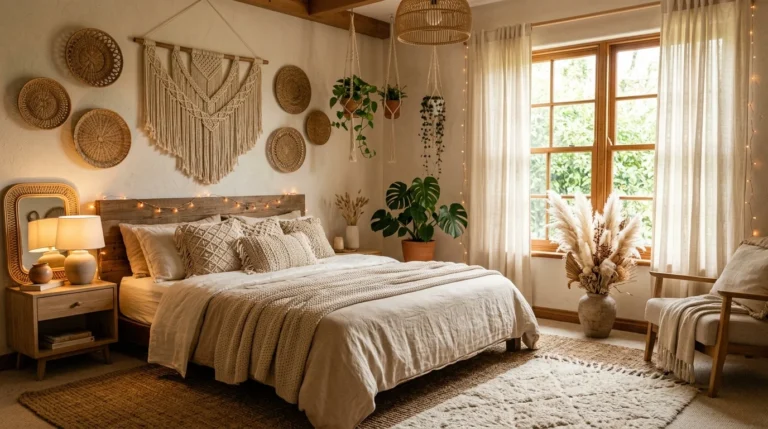

18 Jaw-Dropping Modern Luxury Bedroom Designs That Feel Like a 5-Star Hotel
You don’t need a five-star resort budget to sleep like you’re staying in one. Modern luxury bedroom design has shifted toward something more personal — spaces where rich textures, intentional lighting, and a calm color palette do the heavy lifting. Whether you live in a studio apartment or a sprawling home, the principles behind hotel-worthy bedrooms are surprisingly simple to replicate. This article walks through 18 distinct design ideas, each one packed with practical tips you can actually use. Some will cost you nothing but an afternoon rearranging furniture. Others call for a small investment that pays off every single night.
1. The Statement Headboard That Commands the Room

A great headboard is the backbone of any luxury bedroom.
It sets the entire mood before you even notice anything else.
Go tall. Floor-to-ceiling headboards make ceilings feel higher and rooms feel more intentional. You don’t need to spend thousands — many furniture stores sell tall upholstered panels for under $300.
DIY option: Buy a foam headboard kit from Amazon and a yard of boucle or velvet fabric. Staple the fabric over the foam, mount it with French cleats, and you have a custom piece for around $80.
Color matters. Deep jewel tones — sapphire, forest green, burgundy — look expensive against white or cream linen.
Avoid overly light headboards in small rooms; they tend to disappear.
If your bed frame already has a headboard, consider layering a freestanding decorative panel behind it for added depth and dimension. It’s an easy swap that photographs beautifully and costs very little.
2. Layered Lighting That Actually Flatters

Single overhead lights are the fastest way to make a bedroom feel like a rental.
Luxury bedrooms use at least three light sources, each doing a different job.
Here’s the breakdown:
Ambient light sets the room’s general brightness. Think recessed lights with a warm bulb (2700K), or a pendant centered above the bed.
Task light goes on nightstands — plug-in sconces or adjustable reading lamps handle this perfectly without any rewiring.
Accent light adds drama. LED strip lights tucked behind a floating headboard panel, or underneath a floating bed platform, create that hotel-suite glow for about $30.
Install all lights on separate dimmers. A single $12 dimmer switch changes everything.
Avoid cool white bulbs (5000K+). They’re harsh and clinical. Stick to warm white (2700K–3000K) throughout.
The goal is to control the mood of your bedroom the way a hotel does — not with more light, but with the right light in the right places.
3. A Neutral Color Palette with One Bold Anchor

Neutral bedrooms feel expensive because they feel calm.
But “neutral” doesn’t mean boring. The trick is choosing a warm base — putty, greige, oat, or dune — and then adding one bold anchor that pulls focus.
That anchor could be a dark accent wall behind the bed. Or a single oversized piece of abstract art. Or a deep-toned wardrobe against otherwise light walls.
Paint is your biggest bang for your buck here. A room repainted in a warm, dusty tone costs $40 in paint and transforms the entire space.
Avoid stark white. Pure white reads cold and stark. Off-white, cream, or warm white makes a room feel curated and restful.
Keep the rest of the palette in the same tonal family — layering textures within a single color range is what separates a designed room from a decorated one.
Linen, cotton, wool, and wood in similar tones create depth without visual noise.
One bold anchor. Everything else? Quiet.
4. Floating Furniture for an Airy, Modern Feel

Furniture with legs — especially thin, tapered ones — makes rooms feel larger.
But the real luxury move is floating furniture.
Wall-mounted nightstands open up floor space and make cleaning effortless. They’re available on Amazon for $60–$120 per pair and install in under an hour with basic wall anchors.
Platform beds that sit close to the floor with a floating base look dramatically expensive. The gap underneath can be lit with an LED strip for a glowing, suspended effect.
Clear the floor. Every visible foot of floor space reads as square footage. The more floor you can see, the bigger and more luxurious the room feels.
Move lamps off the floor and mount them to the wall. Replace a bulky dresser with a floating console or built-in shelving.
This one shift — from grounded to floating — is how luxury hotels make mid-size rooms feel like suites.
The less your furniture touches the floor, the more the room breathes.
5. Hotel-Worthy Bedding Done Right

The bed is the room. Everything else is secondary.
Luxury hotels use three simple layers: a fitted sheet, a flat sheet, and a duvet or comforter.
The trick is thread count and material. Percale cotton (300–400 thread count) feels crisp and cool. Sateen feels silky and a touch warmer. Either is fine — just make sure it’s 100% cotton.
Pillow arrangement for a hotel look:
- Two sleeping pillows against the headboard
- Two Euro shams (26×26) in front of them
- One or two decorative cushions in a different texture
That’s it. Simple, clean, and intentional.
Add a folded throw at the foot of the bed in a contrasting texture — waffle weave, cashmere, or chunky knit. It adds warmth and breaks up the expanse of white.
Affordable picks: IKEA’s NATTJASMIN sheets, Amazon Basics percale, and Target’s Threshold linen are all under $60 and look genuinely beautiful.
Make the bed every morning. Seriously — this alone transforms how a bedroom feels.
6. A Statement Ceiling That Changes Everything

Most people completely ignore the ceiling.
That’s exactly why working with it makes such a big impact.
A bold ceiling draws the eye up, makes the room feel taller, and adds a layer of design sophistication that most bedrooms never reach.
Easy ceiling upgrades:
Paint it a dark color. A deep navy, charcoal, or forest green ceiling above a light room creates a cocooning, intimate feeling. It costs the same as painting a wall.
Add peel-and-stick ceiling tiles or molding. You can create a coffered look with lightweight foam molding from home improvement stores. A full ceiling treatment runs about $100–$200 in materials.
Install an LED halo. A floating ceiling cloud — a thin MDF panel suspended slightly below the ceiling with LED strips hidden around the edge — creates a dramatic glowing effect. Many tutorials walk through this for under $150.
The ceiling is the one surface in a bedroom with no furniture competing against it.
Use it.
7. A Dedicated Dressing Corner or Walk-In Area
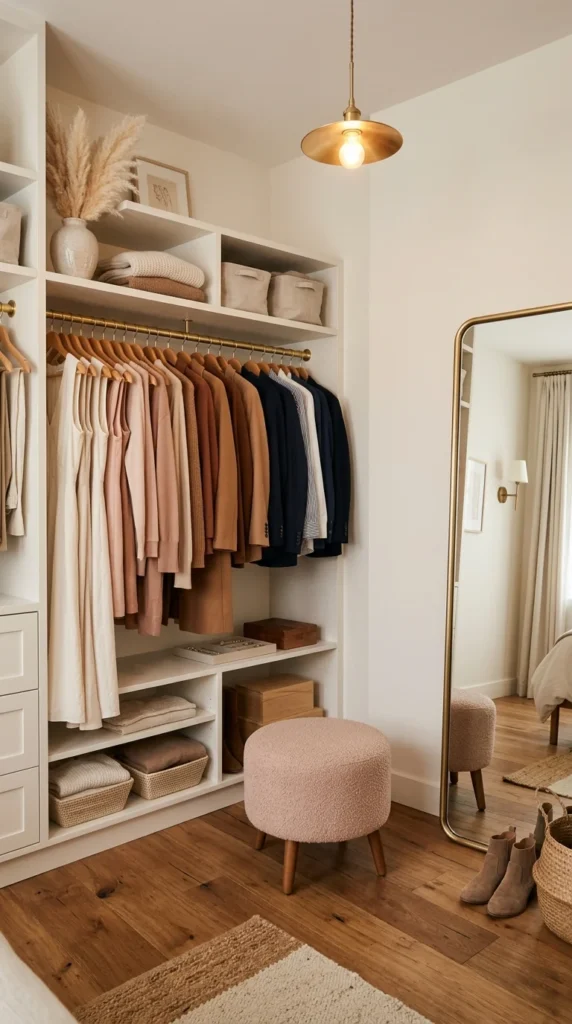
Luxury hotels always separate the dressing zone from the sleeping zone.
You don’t need a full walk-in closet to do this.
Define a corner of your room as a dedicated dressing area. A freestanding clothing rack, a full-length mirror, and a small stool are all you need to create the feeling of a dressing room.
Open wardrobe systems — like those from IKEA’s PAX line or budget alternatives — organize your clothing while looking deliberately curated when styled correctly.
Style tip: Arrange clothing by color within categories. Whites and creams together, darks together. This makes an open wardrobe look like a boutique display.
A full-length mirror is non-negotiable. Mirrors expand the sense of space and add light. Lean one against the wall for an effortless, editorial look.
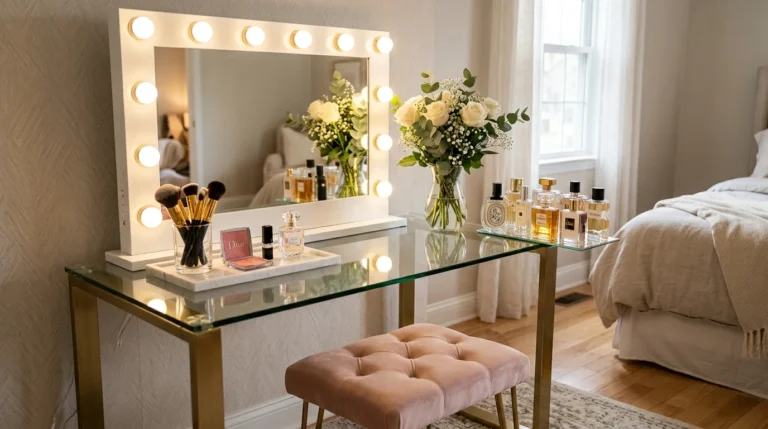
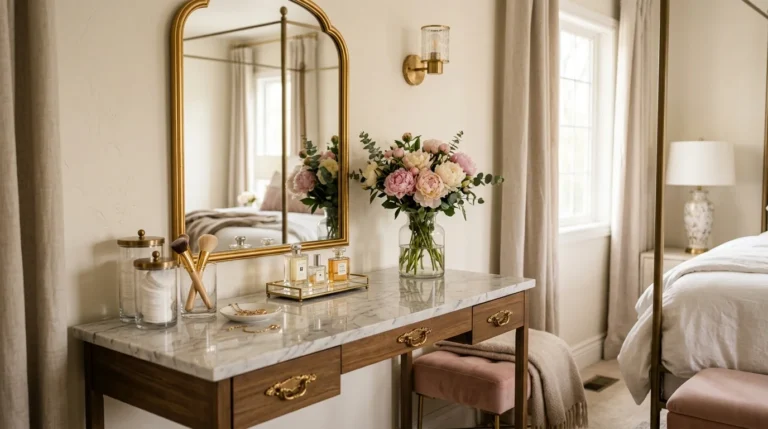
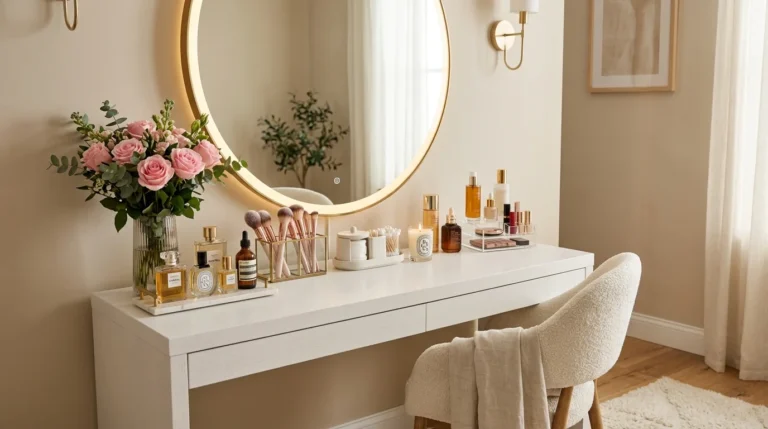
Add a tray or small shelf nearby for perfume, jewelry, or accessories. This keeps the main bedroom surface — your nightstand and bed — completely clear and calm.
The separation of “getting ready” from “sleeping” is one of the most underrated luxury habits.
8. Textured Walls That Add Depth Without Paint

Flat painted walls are fine. Textured walls are unforgettable.
Modern luxury bedrooms lean heavily on wall texture to create depth and visual interest without adding clutter.
Limewash paint is the most popular option right now — and for good reason. It creates a living, layered finish that looks like ancient Italian plaster. You can buy it pre-mixed from brands like Portola Paints or Romabio. One gallon costs about $40–$60 and covers a standard wall.
Peel-and-stick fluted panels are another strong option. These 3D wall panels install without professional help and create a dramatic ribbed texture behind the bed. A full accent wall runs about $80–$150 in materials.
Grasscloth or textured wallpaper adds warmth and pattern while remaining subtle. Many peel-and-stick versions are available under $50 for an accent wall.
The key is to choose one textured wall — usually behind the bed — and keep the rest of the room calm.
Texture does the talking. Everything else should listen.
9. Intentional Art Placement (Not Just Hanging Things)

One large piece of art beats a gallery wall every single time in a luxury bedroom.
Gallery walls are busy. They scatter attention. A single oversized piece — hung correctly — creates a focal point that anchors the entire room.
Sizing rule: The art should be roughly 75% of the width of your headboard. If your bed is 60 inches wide, aim for a canvas around 40–50 inches wide.
Hang it lower than you think. The bottom of the frame should sit about 6–8 inches above the headboard. Most people hang art too high.
Affordable options:
- Society6, Minted, and Desenio offer large prints from $30–$80
- IKEA sells oversized canvases and frames for under $60
- Canvas prints from Printful or Canvaspop let you print custom pieces affordably
Stick to muted, abstract, or nature-inspired art. Bold colors compete with the bed. Calm tones support it.
One piece. Centered. Hung low. It’s that simple.
10. A Soft Area Rug That Anchors the Bed

A rug ties the bedroom together in a way that no other accessory can.
It defines the sleeping zone, adds warmth underfoot, and layers in texture — all at once.
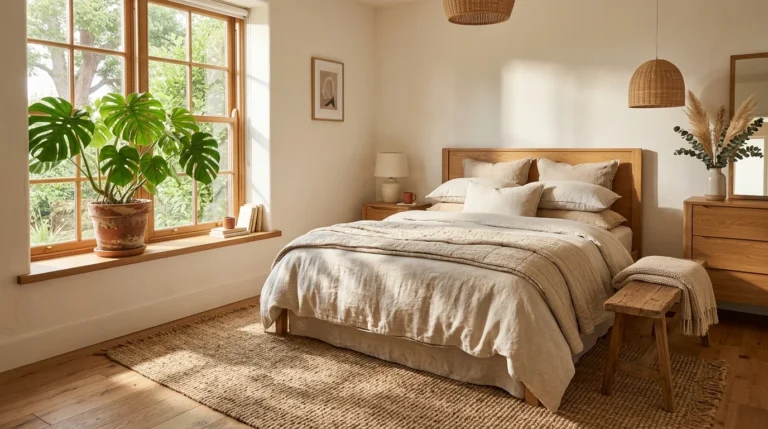
Size matters more than anything. A too-small rug is worse than no rug. For a king bed, go 9×12 feet. For a queen, go 8×10. The rug should extend at least 18 inches past each side of the bed.
Placement: Center the rug under the bed so the front two-thirds of the bed sit on the rug. The foot of the bed rests on the rug. The headboard touches the floor behind it.
Budget picks:
- Ruggable offers washable rugs in luxury-looking designs from $150–$300
- Wayfair’s Joss & Main line has affordable wool-look options
- IKEA’s STOCKHOLM rug is a legitimate sleeper hit under $200
Stick to natural tones: jute, sisal, cream wool, or soft grey. These age well and photograph beautifully.
The rug doesn’t need to be expensive. It needs to be the right size.
11. Minimalist Nightstands with Curated Styling

Your nightstand tells the story of your whole bedroom.
A cluttered nightstand makes even the most beautiful room feel chaotic. A curated one feels like a boutique hotel every single morning.
The rule of three: Each nightstand should have no more than three intentional items. A lamp. A small object with meaning (a candle, a plant, a single book). And one functional item (a glass of water, your phone — kept face down).
Hide the cables. Run your charging cable through a small hole drilled in the back of the nightstand, or use a wireless charger sitting flat. Visible cords are the fastest way to destroy the look.
Lamp selection: Choose lamps with fabric shades — linen, cotton, or pleated. They cast soft, flattering light. Avoid plastic shades or anything that looks office-adjacent.
Matching nightstands on both sides of the bed create symmetry, which reads as expensive. If you have mismatched ones, paint them the same color for instant cohesion.
Less on the nightstand. More in the room.
12. Full-Length Mirrors Placed Strategically
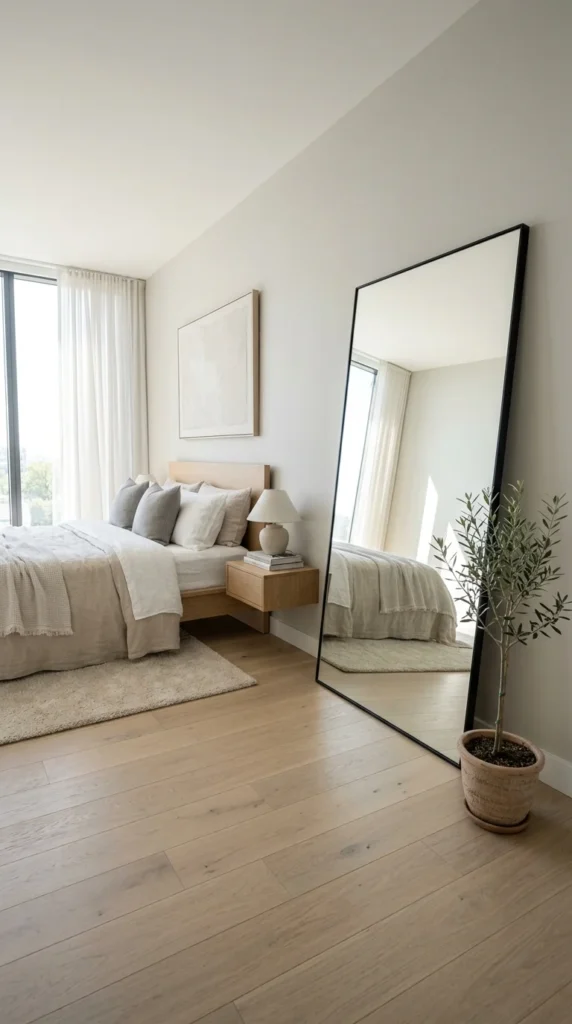
Mirrors are one of the most underused tools in bedroom design.
A well-placed full-length mirror does three things at once: it doubles perceived space, bounces light into darker corners, and adds a functional dressing point to the room.
Placement options:
- Lean it against the wall in a corner at a slight angle. This creates an editorial, intentional look without any wall damage.
- Mount it behind the door to save floor space while still getting full-length coverage.
- Place it opposite a window to reflect natural light across the room — this is the most effective way to make a small bedroom feel twice as large.
Frame style matters. Thin gold or brass frames feel luxurious. Matte black feels modern. Natural wood feels warm and organic.
Avoid beveled, ornate, or overly decorative frames — they read as dated.
Budget pick: IKEA’s HOVET mirror is 77 inches tall, comes in aluminum or black, and costs under $150. It consistently looks more expensive than it is.
One mirror. Positioned correctly. Transformative.
13. Plants That Add Life Without Overwhelming
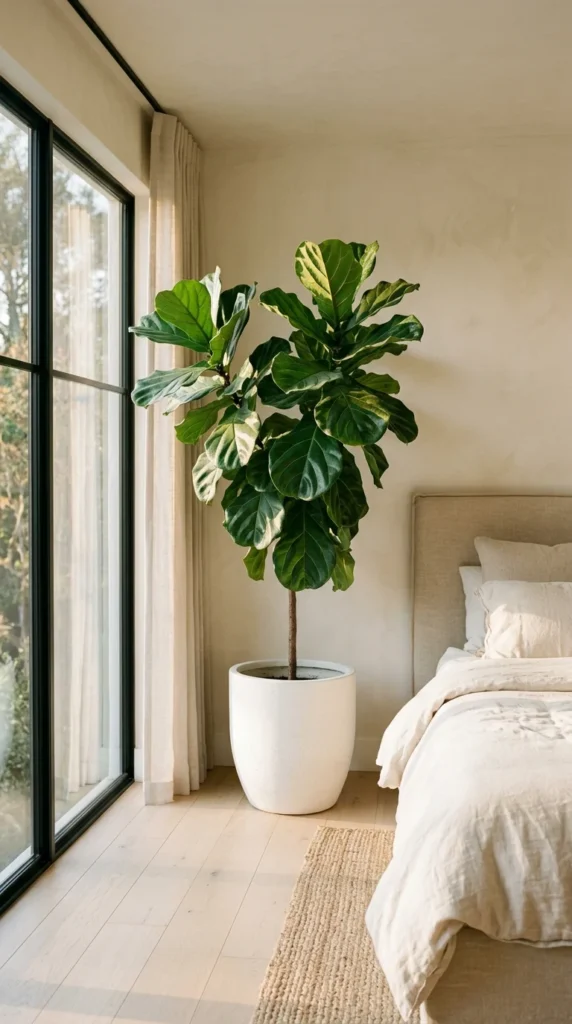
A single well-chosen plant can do more for a bedroom than ten throw pillows.
Plants add life, color, and organic texture — all while improving the air quality of your sleeping space.
The key is scale and restraint.
One large plant beats ten small ones. A fiddle leaf fig, snake plant, or monstera in a beautiful pot becomes a design element, not just a decoration.
Best plants for bedrooms:
- Snake plant (Sansevieria): Nearly indestructible, low light, filters air
- Pothos: Trails beautifully, tolerates neglect, grows quickly
- Peace lily: Blooms white, loves shade, thrives in humidity
Pot selection: Stick to matte ceramics in neutral tones — white, terracotta, sage green. Avoid plastic pots. A beautiful pot elevates even a $5 plant from the grocery store.
Placement: Corner near a window, beside the mirror, or on a floating shelf. Keep plants off the floor unless they’re tall enough to stand as a statement piece.
One healthy, well-potted plant. That’s enough.
14. Smart Storage That Stays Completely Hidden

Luxury bedrooms don’t look organized. They look empty.
The difference is hidden storage — and it changes everything.
Bed with storage drawers is the single most space-efficient upgrade for any bedroom. Beds with built-in drawers underneath eliminate the need for a separate dresser entirely. Many options exist from $300–$700 on Wayfair, Amazon, and IKEA.
Ottoman at the foot of the bed serves double duty — it’s a surface, a seat, and a storage box. Lift the lid and store extra blankets, pillows, or off-season items inside.
Built-in wardrobe with flush doors (no visible hardware, push-to-open mechanism) creates an unbroken wall of calm. IKEA PAX units with custom fronts from companies like Semihandmade can achieve this for a fraction of bespoke cabinet costs.
Floating shelves with baskets: Display a few curated items on the shelf; use baskets to hide everything else.
The rule: every item that doesn’t add beauty should be hidden from view.
When clutter disappears, luxury appears automatically.
15. A Reading Nook That Earns Its Square Footage

A reading corner inside the bedroom takes a room from functional to genuinely luxurious.
It signals that this space was designed for rest, not just sleep.
You don’t need a big room. You need a corner, a chair, and a light source.
Chair options that work:
- A curved barrel chair in boucle or velvet ($150–$400)
- A slipper chair with a low profile that doesn’t crowd the room
- A rattan peacock chair for a warmer, more organic look
The light: A tall arc floor lamp with a warm bulb is the standard. It casts focused downlight for reading without overwhelming the room. Good options start at $80.
Add one surface — a small side table or wall-mounted shelf — for a drink and a book. That’s all you need.
Define the zone: A small rug under the chair separates the reading corner from the sleeping zone, even in an open room.
This corner doesn’t need to be elaborate. It just needs to be intentional.
Give yourself a reason to linger in your own bedroom.
16. Scent as a Design Element

Five-star hotels smell like money.
Scent is one of the most powerful and most overlooked design elements in a bedroom — and it costs almost nothing to get right.
The hotel approach: Hotels use a signature scent — one consistent fragrance dispersed through diffusers, linen sprays, and candles. You can do the same at home.
How to build a bedroom scent palette:
- Choose one hero scent — sandalwood, amber, cedar, or white tea are calm and luxurious
- Use a reed diffuser for constant, low-level fragrance
- Layer with a candle for evening ambiance
- Spray your linens with a linen mist after making the bed
Budget picks:
- Maison Margiela Replica candles are a genuine luxury for around $60
- IKEA candles + a few drops of essential oil in a diffuser cost under $20 and work beautifully
- Linen spray: a few drops of lavender or cedar in a spray bottle with water is genuinely effective
Scent is the one design element guests feel before they see anything else.
A bedroom that smells beautiful already feels expensive.
17. Curtains That Pool Dramatically on the Floor

Nothing makes a bedroom ceiling feel taller than floor-to-ceiling curtains.
And the trick isn’t expensive fabric — it’s hanging them correctly.
Rule one: Mount the rod at the ceiling, not at the window frame. This single change makes ceilings feel dramatically higher and rooms feel more refined.
Rule two: Let them pool. Curtains that puddle 2–4 inches on the floor look intentional and luxurious. Curtains that hover an inch above the floor look like a mistake.
Rule three: Go wider than the window. The rod should extend 12–18 inches past each side of the window frame. When the curtains are open, no fabric covers the glass — and the window looks twice as large.
Fabric picks:
- Linen or linen-look: Casual, beautiful, diffuses light gently
- Velvet: Dramatic, light-blocking, deeply luxurious-looking
- Sheer white cotton: Airy, romantic, works in any room
IKEA’s MAJGULL or DYTÅG curtains are consistently underrated and cost $40–$80 per pair.
Ceiling-mounted. Floor-pooling. Game-changing.
18. A Spa-Inspired Colour Palette Borrowed from Nature

The color palettes used in the world’s best spa bedrooms share one thing: they’re all borrowed from nature.
Not a manufactured version of nature — the actual thing. Stone, sand, still water, dry grass, aged wood.
The five nature-inspired palettes that always work:
1. Desert floor: Terracotta, sand, warm beige, burnt sienna 2. Forest floor: Sage green, bark brown, warm grey, deep olive 3. Coastal stone: Driftwood grey, oyster white, pale navy, mist blue 4. Arctic morning: Pale birch, dove white, cool grey, silver 5. Deep earth: Charcoal, warm black, soil brown, cream
Pick one palette family. Use two to three tones from within it. Apply the lightest tone to walls, mid-tones to textiles, and the deepest shade as one or two accent pieces.
This approach works at any budget because it’s about color relationships, not expensive materials.
A $20 can of paint in sage green, paired with $40 of ivory linen from a discount store, can produce a bedroom that genuinely looks like a high-end retreat.
Nature doesn’t do clashing colors. Follow its lead.
Conclusion
Great bedroom design isn’t about spending more — it’s about making smarter decisions with what you already have and what you choose to add.
The 18 ideas above share a common thread: they all create calm, intentional spaces where every element earns its place. A tall headboard that commands the room. Layered lighting that flatters rather than glares. Curtains hung from the ceiling that make everything feel taller. A single large piece of art instead of a chaotic gallery. Hidden storage that keeps surfaces clear and minds quiet.
Start with one idea that feels achievable this week. Maybe it’s repositioning your nightstand lamp, or ordering a rug that actually fits your bed. Small, deliberate changes compound quickly. Within a month of applying even five of these ideas, your bedroom will look and feel like a room you paid a designer to create.
The goal isn’t perfection. It’s a space that makes you feel genuinely rested the moment you walk in — before you’ve even touched the bed.
That feeling is available to everyone. Now you know exactly how to get there.