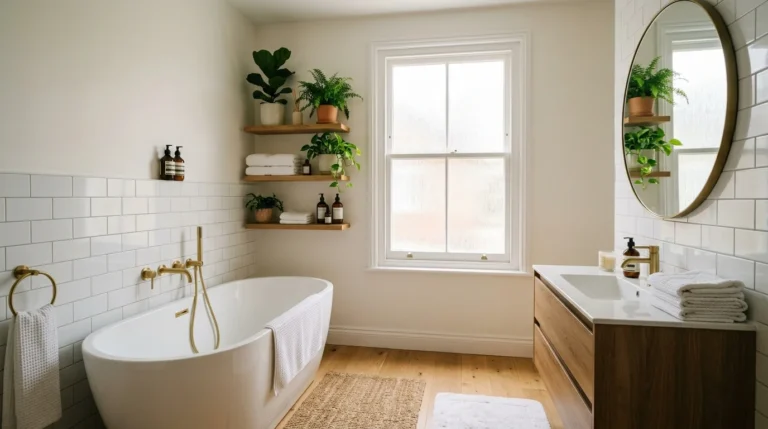

18 Stunning Bathroom Vanity Designs That Make Your Space Look Luxe
Your bathroom vanity is the first thing you see every morning and the last thing you see every night. It sets the entire mood of the space. A great vanity doesn’t have to cost a fortune — it just has to be designed with intention. Whether you’re working with a cramped powder room or a spacious master bath, the right vanity design can make it feel polished, purposeful, and genuinely high-end. This guide walks you through 18 real, achievable vanity designs — with practical tips, budget-friendly swaps, and ideas you can act on today.
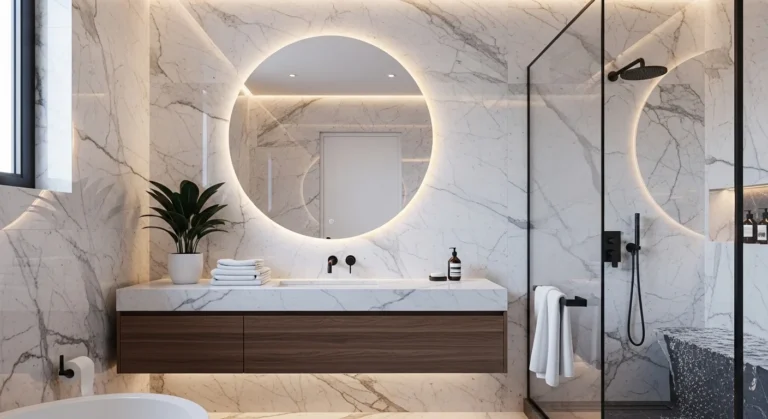
1. Floating Vanity With a Waterfall Countertop

A floating vanity instantly opens up floor space and makes your bathroom look bigger. It’s wall-mounted, so the floor underneath is visible — that gap creates the illusion of a larger room.
The waterfall countertop is the showstopper. Instead of a standard edge, the stone material continues down the side of the vanity like a waterfall. It looks expensive, but you can achieve a similar effect with butcher block or laminate panels cut to match your countertop thickness.
Here’s how to do it affordably:
- Buy a pre-made floating vanity from IKEA or Home Depot.
- Use contact-adhesive laminate in a marble or quartz pattern for the countertop and waterfall panel.
- Pair it with a matte black faucet for a high-contrast, modern look.
The floating design also makes cleaning easier. No grout lines on the floor around the base. No trapped dirt in corners. Just open, airy space that photographs beautifully and functions even better. This is one of the most impactful changes you can make in a bathroom without a full renovation.
2. Antique Dresser Converted Into a Vanity

An old dresser turned vanity is one of the most charming — and affordable — bathroom upgrades you can do yourself. You get a one-of-a-kind piece with serious character that no big-box store sells.
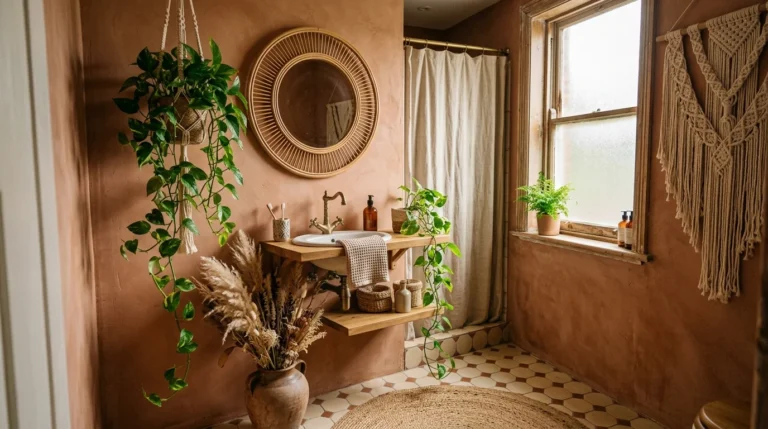
Here’s what the process looks like:
- Find a solid wood dresser at a thrift store or Facebook Marketplace for $20–$80.
- Sand it down, paint it, and seal it with a waterproof topcoat.
- Have a plumber cut the sink hole and connect the plumbing through the existing drawers.
The top drawer usually becomes a false front — it won’t open, but it keeps the visual look intact.
Chalk paint works beautifully for this project. It adheres without much prep and gives a soft, matte finish. Pair it with unlacquered brass hardware for an organic, vintage feel.
This design works especially well in farmhouse, cottage, or eclectic bathrooms. It tells a story. Guests always ask about it. And because you’re not buying a new vanity, you’re saving hundreds of dollars while creating something completely original.
3. Double Vanity With Integrated Lighting

A double vanity is a game-changer for shared bathrooms. No more bumping elbows. No scheduling the sink. Each person gets their own dedicated space, and when it’s designed well, it looks incredibly intentional.
The real upgrade here is integrated lighting. Instead of traditional sconces, LED strips are mounted directly into the wall above each mirror. This casts even, flattering light across the face — far better than overhead lighting, which creates harsh shadows.
Budget approach:
- Buy two individual single-sink vanities and install them side by side with a filler panel between them for a seamless look.
- Add LED strip lights behind a floating ledge or inside a recessed channel above the mirror.
- Use the same hardware finish across both sides for visual cohesion.
The double vanity doesn’t require a huge bathroom. Many work beautifully in spaces as narrow as 60 inches wide. If floor space is tight, consider vessel sinks instead of undermount — they sit higher, making the countertop space appear wider. A coordinated color between the cabinets and the walls also helps the whole unit feel built-in rather than placed.
4. Vessel Sink on a Concrete Slab Vanity

A vessel sink sitting on a raw concrete slab looks like something out of a boutique hotel. It’s bold, tactile, and completely different from the typical white vanity cabinet.
The concrete doesn’t have to be poured in place. You can buy pre-cast concrete countertops online or at specialty tile shops. Some start at around $200 for a standard bathroom width.
Here’s how to DIY the look for less:
- Use a cement board covered with skim coat to simulate poured concrete.
- Seal it with two coats of matte concrete sealer — this protects against moisture and staining.
- Set your vessel sink on top and use a tall faucet that clears the sink’s rim.
For the base, floating shelves made from raw pine or reclaimed wood look intentional beneath the slab. Add pipe brackets for an industrial edge.
This design pairs best with exposed materials — brick, wood, steel. The roughness of the concrete contrasts nicely with the smooth ceramic of the vessel sink. It’s a design that embraces imperfection and makes it beautiful. Great for studio apartments, basement bathrooms, or any space where you want a raw, artistic feel.
5. Japandi-Style Vanity in Natural Wood and White

Japandi is a design philosophy that marries Japanese minimalism with Scandinavian warmth. Applied to bathrooms, it means clean lines, natural materials, and a sense of quiet calm.
The key ingredients:
- Light wood cabinetry — oak, ash, or birch with a natural oil finish.
- Flat-front drawers with push-to-open hardware (no handles — this keeps the look uncluttered).
- White or stone-toned countertop — thin profile, no ornate edge.
- A round or simple rectangular mirror with no frame, or a very slim wooden frame.
You don’t need to spend a lot. IKEA’s GODMORGON base and TOLKEN countertop combination hits almost every note for under $400. Add real wood drawer fronts from a company like Semihandmade to upgrade the look significantly.
Keep the accessories minimal — one small plant, one soap dish, one hand towel. Every object on the counter should earn its place.
This style works in any size bathroom. It calms the eye and makes even a crowded space feel like a retreat. The goal isn’t perfection — it’s intention. And in Japandi design, less is always more.
6. Hollywood Glam Vanity With Lighted Mirror

This is the vanity that makes you feel like a movie star. The Hollywood glam look is dramatic without being over the top — as long as you balance it with clean lines.
The star of this design is the lighted mirror. Globe bulbs running along the top and sides of the mirror give that classic backstage dressing room effect. These mirrors are now widely available at retailers like Target, Home Depot, or Amazon for $80–$200.
To complete the look:
- Use a glossy white cabinet with chrome or gold hardware.
- Choose a white countertop with gold or grey veining — marble-look laminate works perfectly.
- Add a round undermount or vessel sink in white ceramic.
- Keep accessories curated: a crystal tray, a scented candle, a small plant.
The lighting is everything here. The globe bulbs cast warm, diffuse light that’s flattering on the face and makes the whole room feel soft and luminous.
This design works especially well in master bathrooms or dedicated vanity spaces. It feels indulgent but is completely achievable with off-the-shelf parts. A lighted mirror alone can completely transform a plain vanity into something that feels cinematic.
7. Open-Shelf Vanity for Small Bathrooms

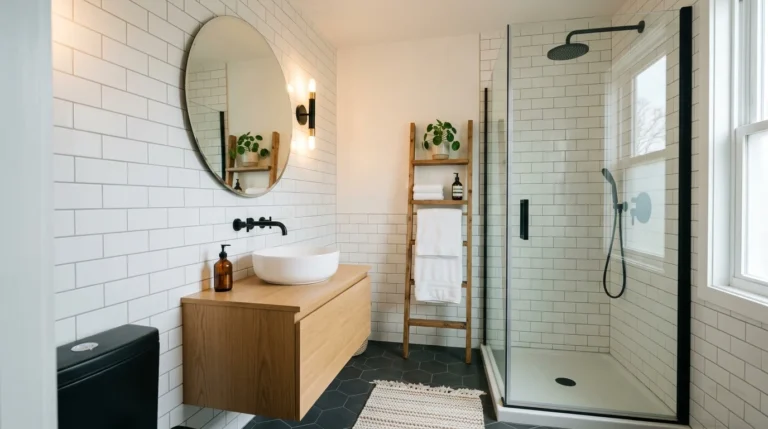
Small bathrooms often feel cramped because of bulky vanity cabinets. An open-shelf vanity removes that visual weight and makes the space breathe.
Instead of doors, the shelves below the sink are open. Everything stored there is visible, which means you have to stay organized — but that’s also a design opportunity. Neatly folded towels, small baskets, and ceramic dishes become part of the display.
Tips for making open shelves work:
- Use matching baskets or bins to store toiletries out of sight.
- Stick to a two-tone color palette — white towels, one accent color.
- Keep only what you actually use on the shelves.
For a budget build, mount a floating wood shelf (from a home improvement store) and add hairpin legs for a mid-century touch. A farmhouse sink or small drop-in basin completes the look.
The open shelf design also makes plumbing visible — so invest in decorative pipe covers or choose a stylish p-trap in chrome or brushed gold. That exposed hardware can become a design detail rather than an eyesore.
8. Black Matte Vanity With Gold Accents

Black and gold is one of the most timeless pairings in interior design. In a bathroom, it reads as luxurious without trying too hard.
The matte finish is key. Glossy black can look too stark or feel dated. Matte black has depth — it absorbs light rather than reflecting it, giving the vanity a quiet, confident presence.
How to get this look affordably:
- Buy a simple white or light-wood vanity and spray paint it with matte cabinet paint in black. This costs about $30–$50 in supplies.
- Swap out existing hardware for brushed gold bar pulls — a full set runs $20–$40.
- Add a thin gold-framed mirror from Amazon or HomeGoods.
- Use a white countertop to keep the contrast crisp.
The combination of matte black and warm gold feels high-end because it’s not trying to match everything perfectly. The contrast does the work.
Keep wall colors neutral — white, cream, or soft grey. Let the vanity be the statement piece in the room. This design is especially impactful in a powder room where guests will stop and notice it immediately.
9. Reclaimed Wood Vanity for a Rustic Look

Reclaimed wood vanities bring warmth, history, and texture to a bathroom. Every knot and grain mark tells a story. No two look alike — which is exactly the point.
You don’t need to buy reclaimed wood from an expensive specialty shop. Check:
- Craigslist or Facebook Marketplace for old barn boards or pallet wood.
- Habitat for Humanity ReStores for salvaged lumber.
- Your own backyard for naturally weathered boards.
Once you have your wood, seal it thoroughly. Exterior-grade polyurethane works well for bathroom environments because it handles moisture and humidity. Apply three or four coats and let it cure fully before use.
Pair the wood vanity with:
- An oil-rubbed bronze or black faucet to complement the earthy tones.
- A white farmhouse or apron-front sink.
- A simple shiplap or board-and-batten wall behind it.
The rustic look is forgiving. Imperfections in the wood are features, not flaws. If your cuts aren’t perfect or the stain is uneven, it adds to the handmade character. This style suits cabins, farmhouses, and any space where you want natural warmth over polish.
10. Minimalist All-White Vanity With Hidden Storage

All-white vanities look clean, calm, and surprisingly timeless. The key is layering different textures within the same color palette so the room doesn’t feel sterile.
Integrated sinks — where the sink and countertop are one continuous piece — are the cleanest solution for this look. There are no seams or caulk lines to collect grime. They’re available in solid surface, porcelain, and reinforced resin materials. Prices range from $150 to $600.
For the hidden storage approach:
- Use floor-to-ceiling cabinetry if your ceiling height allows — this maximizes storage while keeping the wall clean.
- Install push-to-open hinges so there are no hardware elements breaking the visual plane.
- Use pull-out drawer inserts inside to organize everything without making a mess.
Keep the mirror large and frameless. A mirror that spans the full width of the vanity visually doubles the space and reflects light beautifully.
The all-white palette also makes the bathroom easier to maintain — you can spot dirt instantly and clean it fast. It’s a design that rewards tidiness and creates a genuinely spa-like atmosphere with minimal effort.
11. Industrial Pipe Vanity With Raw Edges

This style is all about honesty — no hidden hardware, no covered plumbing, no softening of the industrial bones.
The frame of the vanity is made from black iron pipes and flanges. These are available at any hardware store for a few dollars per piece. The whole frame for a standard vanity costs $40–$80 in pipe fittings.
Here’s how to build it:
- Design your pipe frame — legs, horizontal rails, and shelf supports.
- Screw pipe flanges into wall studs for stability.
- Lay a butcher block or reclaimed wood slab on top.
- Seal the wood and add your sink.
The open design means plumbing is visible — choose a matte black P-trap and supply lines to match the aesthetic. These are available online for about $30.
Industrial vanities look incredible in loft apartments, modern farmhouses, or any space with exposed brick or concrete. The raw materials don’t try to be something they’re not — and that confidence reads as stylish.
Add Edison bulb lighting overhead and the whole look pulls together into something genuinely cool and functional.
12. Curved Vanity With Soft Organic Lines

Most bathroom vanities are boxy. The curved vanity breaks that pattern completely — and the result is soft, organic, and genuinely relaxing to look at.
Curved cabinetry has grown in popularity as homeowners seek to move away from the sharp angles of modern minimalism. The rounded front of the vanity feels more sculptural than functional — in the best way.
If a custom curved cabinet is outside your budget:
- Look for retro or vintage vanities at thrift stores — many from the 1950s and 60s have rounded corners and organic shapes.
- Paint them in earthy tones like terracotta, cream, dusty rose, or sage green.
- Pair with a round basin or round mirror to reinforce the circular motif throughout the space.
Curves also make a vanity feel less imposing in a small bathroom. Because there are no sharp corners, the eye moves around the room more easily.
Finish with soft, warm lighting — a backlit mirror or warm-toned sconces. Avoid cool white light here; it works against the warmth the design is trying to create. This style suits bathrooms that lean romantic, bohemian, or eclectic.
13. Two-Tone Vanity With Contrasting Upper and Lower Cabinets

Two-tone vanities are a smart way to add visual depth without making your bathroom feel busy. The upper and lower sections of the vanity are painted or finished in two different colors — and the contrast does all the design work.
Popular combinations:
- White upper + navy lower — classic and bold.
- Cream upper + sage green lower — soft and organic.
- Light grey upper + black lower — sleek and modern.
The countertop acts as the visual break between the two tones. Choose a countertop color that bridges both — a white with grey veining works for almost every combination.
To DIY a two-tone vanity:
- Use a furniture-grade cabinet paint with a semi-gloss finish (it handles moisture better).
- Tape off the sections clearly.
- Apply two to three coats to each section and let each dry fully before moving to the next.
Use the same hardware finish on both sections — this ties the two tones together and prevents the look from feeling like a mistake rather than a design choice.
This technique works on existing vanities too. You don’t need to buy anything new. A can of paint and an afternoon can completely change the personality of a bathroom.
14. Spa-Inspired Vanity With Built-In Towel Warmers

A towel warmer next to the vanity is one of those small upgrades that feels wildly indulgent every single day. Warm towels after washing your hands or face — it’s the detail that makes a bathroom feel like a five-star spa.
You don’t need a built-in model. Plug-in towel warmers mount to the wall and run on a standard outlet. They cost $50–$150 and require no special wiring. Many can be set on a timer so your towel is warm exactly when you need it.
To integrate this cleanly with your vanity:
- Mount the towel warmer on the side panel of the vanity cabinet, just below countertop height.
- Choose a finish that matches your faucet — brushed gold, chrome, or matte black.
- Keep only one or two towels on the rack — the look is curated, not cluttered.
Pair this with a backlit mirror and a diffuser with eucalyptus or lavender on the counter. The combination of warm light, warm towels, and scent turns your morning routine into a ritual.
This upgrade costs less than $200 total and transforms the feeling of the space more than almost any other single change.
15. Statement Mirror That Outshines the Vanity

Sometimes the vanity itself is secondary. The mirror above it becomes the centerpiece — the piece that makes the room.
An oversized, ornate, or unusual mirror above a simple vanity creates instant drama. The vanity doesn’t need to be expensive or complex. It just needs to be a clean backdrop for the mirror to shine against.
Mirror styles that make a statement:
- Arched mirrors — adds height and a soft architectural element.
- Sunburst mirrors — sculptural and bold.
- Antique or baroque frames — glamorous and romantic.
- Leaning mirrors (for wider vanities) — casual and editorial.
Where to find statement mirrors affordably:
- Thrift stores and estate sales (look for interesting frames that can be repainted).
- Facebook Marketplace (search “large wall mirror”).
- TJ Maxx, HomeGoods, and World Market for new options under $100.
If the frame color doesn’t work, spray paint transforms it. Gold, black, white — a $6 can of spray paint can completely reinvent an ugly frame.
Choose a mirror that’s slightly wider than your sink. For maximum impact, go as large as your wall allows. More mirror means more light reflection and a more open-feeling bathroom.
16. Skinny Vanity for Narrow Bathrooms

Narrow bathrooms — where the room is only four or five feet wide — present real design challenges. Standard vanities are often too deep to allow comfortable movement.
Slim vanities (sometimes called “shallow depth” vanities) are 14–18 inches deep instead of the standard 21–22 inches. That extra 4–8 inches makes a significant difference in a tight space.
Where to find them:
- Search specifically for “shallow depth vanity” or “narrow bathroom vanity” on Amazon, Home Depot, or Wayfair.
- IKEA’s LILLÅNGEN series is designed for tight spaces and starts around $120.
To make a slim vanity feel larger:
- Use a full-width mirror — not just above the sink, but spanning the whole wall.
- Choose a wall-mounted model to keep floor space clear.
- Pick light colors for both the vanity and the walls — same tone creates less visual interruption.
- Add a recessed medicine cabinet instead of a protruding one.
Storage will be limited in a narrow vanity, so plan carefully. Use the space inside efficiently with stackable drawer organizers and mount small wall shelves on either side of the mirror for extra surface area.
17. Terrazzo Countertop Vanity With Bold Color

Terrazzo is back — and it’s one of the most visually exciting countertop materials available right now. It features small chips of marble, glass, quartz, or granite set into a concrete or resin base. Every slab is unique.
Terrazzo works beautifully on vanity countertops because:
- It handles water and daily use well.
- The pattern hides minor water spots and soap residue.
- It comes in colors ranging from subtle to very bold.
Terrazzo countertops can be expensive if custom-poured. But terrazzo tiles are an affordable alternative. Use large-format terrazzo tiles as a countertop surface, set on a plywood backer with an undermount sink. Cost: $3–$12 per square foot.
Pair it with a bold vanity cabinet color — coral, hunter green, cobalt blue. The busy pattern of terrazzo can handle a strong cabinet color without feeling chaotic.
Add brass hardware and faucets — terrazzo and brass have been paired since mid-century design and still look perfect together.
This is not a subtle vanity design. It’s for people who want their bathroom to have personality. And done right, it delivers that energy every single time you walk in.
18. Backlit Mirror Vanity for a Modern Luxury Feel

A backlit mirror is one of the highest-impact, most affordable upgrades you can make to a bathroom vanity area. The mirror glows from behind — casting soft, even light without any visible bulbs.
These mirrors are widely available online for $80–$300 depending on size, and many include features like:
- Adjustable color temperature (from warm to cool white).
- Built-in demister pads so the mirror stays clear after a hot shower.
- Touch controls to adjust brightness.
- USB charging ports built into the frame.
The backlit glow dramatically changes the atmosphere of the bathroom. During the day it’s functional and bright. At night, on low brightness, it creates a calm, moody atmosphere.
To get the most from a backlit mirror:
- Mount it on a darker wall color — the contrast with the light halo is striking.
- Keep the rest of the vanity simple and streamlined — the mirror is the focal point.
- Use a floating vanity below so the light from the mirror reflects off the open floor, amplifying the glow.
This single change — swapping a plain mirror for a backlit one — can make a builder-grade bathroom feel like it belongs in a boutique hotel.
Conclusion
A bathroom vanity doesn’t have to be expensive to look high-end. As you’ve seen across these 18 designs, the most impactful choices often come down to small, specific decisions — the finish on your faucet, the color of your cabinet, the size of your mirror. These are details anyone can control, regardless of budget or space.
Start with one change. Maybe that’s a new mirror, a can of paint, or a plug-in towel warmer. See how it shifts the feel of the room. Then layer in the next detail when you’re ready.
Design isn’t about perfection — it’s about intention. When every element in your vanity area has a reason to be there, the whole space reads as considered and curated. That’s what luxury actually looks like. Not price tags. Not materials. Intention.
Pick the design that fits your life, your budget, and your space. Then go make it happen.